

Table of Contents
- Start With a Wardrobe Audit Before You Buy Anything
- Capsule Wardrobe Essentials for a Budget Wardrobe
- Cost Per Wear Calculation: Shop Smarter, Not Cheaper
- Thrifting Tips for Beginners Who Want Real Results
- Tailoring Hacks That Make Budget Clothes Look Expensive
- Build a Budget Wardrobe With Smart Shopping Habits
- Garment Care and Fabric Durability: Make What You Own Last
- Conclusion
Last Updated: August 16, 2026
Building a budget wardrobe is one of the most practical skills anyone can develop, and most guides get it completely wrong. They tell you to "buy basics" and "shop sales" without explaining the system behind a closet that actually works. This guide gives you the full framework: from auditing what you already own to calculating whether a purchase is actually worth it. Below, you'll find the exact approach that turns a limited budget into a wardrobe that looks intentional, not accidental.
The biggest mistake most people make is shopping before they think. They add pieces without a plan, end up with a closet full of clothes and nothing to wear, and repeat the cycle. That pattern ends here.
Start With a Wardrobe Audit Before You Buy Anything
A wardrobe audit is the process of systematically reviewing every item you own to identify what you actually wear, what fits your life, and what's taking up space. Skipping this step is the single fastest way to waste money on a budget wardrobe.
Pull everything out and lay it on your bed or floor so you can see it all at once. Sort your clothes into three piles: wear regularly, wear occasionally, and haven't worn in over a year. The third pile is almost always larger than people expect. Donate, sell, or discard it.
Identify What You Actually Wear
What remains is your working wardrobe. Look for patterns: what colors do you keep reaching for? What silhouettes feel comfortable? What fabrics do you avoid? These patterns reveal your actual preferences, not the ones you imagine you have.
Define Your Personal Style
Personal style is not about following trends. It's about understanding the context of your daily life and dressing for it consistently. Ask yourself three questions: Where do I spend most of my time? What do I want people to think when they see me? What do I feel most confident wearing?
Write down three to five words that describe how you want to dress. Minimalist. Professional. Relaxed. Edgy. Classic. These words become your filter for every future purchase.
Capsule Wardrobe Essentials for a Budget Wardrobe
A capsule wardrobe is a small, curated collection of versatile basics that work together to create many different outfits. The concept was popularized in the 1970s and remains the most effective framework for a budget wardrobe because it forces intentionality and eliminates redundancy. The goal is to own only what earns its place.
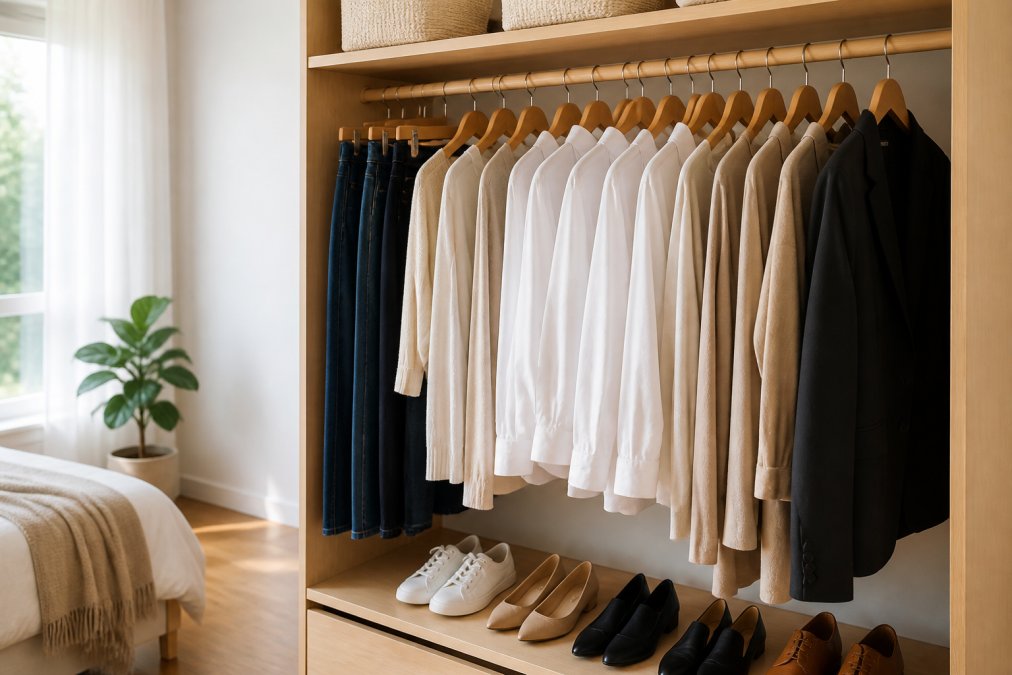
Neutral Colors and Versatile Basics That Do the Heavy Lifting
A neutral palette is the backbone of any functional capsule wardrobe. Neutrals, white, black, navy, grey, beige, camel, work with almost everything, which means fewer pieces generate more outfit combinations.
The core pieces that belong in almost every budget wardrobe:
- One or two quality denim styles that fit well (straight leg or slim tend to be the most versatile)
- White and grey crew-neck or V-neck tops in breathable fabric
- A black blazer or structured jacket for professional attire and elevated basics
- Tailored trousers in a neutral color
- A simple midi or wrap dress in a solid color
- A neutral-colored knitwear layer for seasonal transition
- Clean, simple footwear in black and a nude or tan shade
These wardrobe staples form the foundation. Everything else you add should pair with at least two or three of these pieces.
How to Mix and Match Outfits From a Small Closet
The real value of a neutral palette shows up when you start mixing and matching outfits. A collection of 15 well-chosen pieces can generate dozens of distinct looks. Before buying any new piece, identify at least three existing items in your wardrobe it can pair with. If you can't name three, it's not versatile enough for a budget wardrobe.
Spend ten minutes on Sunday laying out five outfits for the week. This eliminates the morning panic that leads to impulsive shopping.
Cost Per Wear Calculation: Shop Smarter, Not Cheaper
This is the concept that changes how you think about clothing purchases entirely.
Cost per wear is a simple formula: divide the price of an item by the number of times you realistically expect to wear it.
Cost Per Wear = Item Price ÷ Number of Wears
A top that costs $15 but falls apart after five washes and gets worn eight times has a cost per wear of roughly $1.88. A top that costs $45 but holds its shape for three years and gets worn 90 times has a cost per wear of $0.50. The "cheaper" item costs nearly four times more per use.
This reframes the entire shopping conversation. The question isn't "Is this affordable?" It's "Will I actually wear this enough to justify it?"
Apply this thinking especially to wardrobe essentials: quality denim, a good blazer, and solid footwear. These investment pieces carry a higher upfront cost but dramatically lower cost per wear over time. As noted by the Federal Trade Commission's guidance on clothing care labels, proper care of garments significantly extends their usable life, which directly improves your cost per wear on every item you own.
Thrifting Tips for Beginners Who Want Real Results
Thrifting is one of the most effective tools for building a budget wardrobe with quality pieces at a fraction of retail cost. Walking into a thrift store without a plan is overwhelming and usually unproductive.
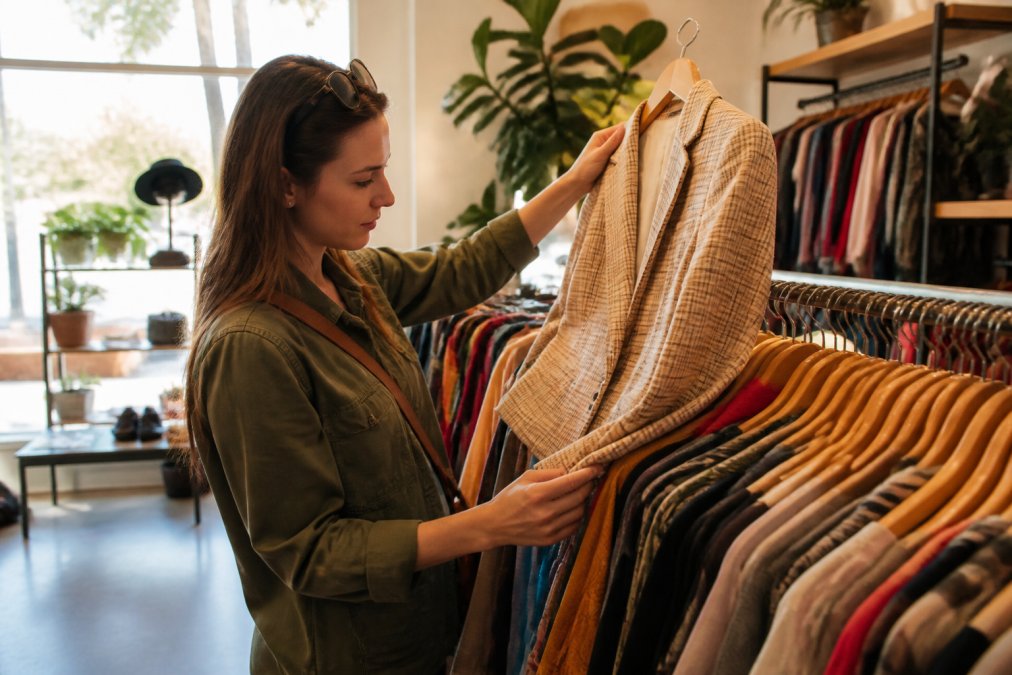
Start with a specific list based on your wardrobe audit. Know exactly what gaps you're filling before you walk in. "I need a structured blazer in black or navy" is a mission. "I'll see what looks good" is how you come home with items you'll never wear.
Practical thrifting tips for beginners:
- Check fabric content first. Turn the item inside out and read the label. Natural fibers like cotton, wool, and linen last longer than synthetic blends.
- Inspect seams and stress points. Check armpits, collar edges, and button holes. A small stain is fixable; a blown seam is usually not worth the repair cost.
- Go on restock days. Most thrift stores restock mid-week. Ask staff when new donations hit the floor.
- Try everything. Vintage and second-hand sizing is inconsistent.
- Visit multiple locations. Second-hand shopping rewards frequency and variety.
The Environmental Protection Agency's overview of textile waste in the US highlights that Americans discard millions of tons of clothing annually. Thrifting directly counters that waste while building a smarter wardrobe.
Tailoring Hacks That Make Budget Clothes Look Expensive
Here's what nobody tells you about budget fashion: fit matters more than price. A well-fitting $20 shirt looks better than a poorly fitting $100 one. Tailoring is the multiplier that makes cheap clothes look expensive.
The most impactful alterations for the price:
- Hemming trousers and jeans. This single alteration transforms the silhouette of any bottom and costs relatively little.
- Taking in the waist on blazers. A boxy blazer becomes structured and sharp with a simple side seam adjustment.
- Shortening sleeves. Shirt and jacket sleeves that are too long immediately read as cheap. Getting them shortened is a minor cost for a major visual upgrade.
For DIY alterations, a basic sewing kit and some YouTube guidance can handle simple hems and button replacements. According to the American Apparel and Footwear Association's resources on garment care, basic garment maintenance skills significantly extend clothing longevity.
Build a Budget Wardrobe With Smart Shopping Habits
Most budget wardrobe failures aren't about money. They're about habits. Impulse buying, shopping without a list, and treating sales as a reason to spend rather than a reason to save are the patterns that keep closets cluttered and wallets empty.
| Shopping Habit | Problem | Fix |
|---|---|---|
| Impulse buying | Fills closet with mismatched pieces | Apply the 48-hour rule before purchasing |
| Shopping sales without a list | Buying things on discount you didn't need | Shop from a pre-made gap list only |
| Buying the cheapest option | High cost per wear, frequent replacement | Calculate cost per wear before deciding |
| Ignoring fit | Pieces sit unworn | Factor in tailoring costs upfront |
| No budget allocation | Overspending across categories | Set category limits before browsing |
Set a Budget Allocation Before You Browse
A budget wardrobe requires a budget. Decide in advance how much you're allocating to clothing per month or per season, then divide that across categories: basics, footwear, outerwear, and accessories.
Allocate the largest portion to wardrobe staples and investment pieces that carry high cost-per-wear value. Allocate the smallest portion to trend pieces or seasonal items that won't last more than one or two years. Sticking to this allocation is easier when you treat clothing like any other budget line item.
Digital Wardrobe Management to Avoid Impulse Buying
Digital wardrobe management is the practice of cataloging your existing clothing using an app or simple photo system so you can see your full wardrobe without opening your closet. Several free and low-cost apps let you photograph each item, tag it by category and color, and build outfits digitally before buying anything new.
The practical benefit: you can see at a glance what gaps actually exist versus what you think you're missing. Many impulse purchases happen because people forget what they already own. A simpler version: take a photo of your full closet after each seasonal organization session and keep it on your phone. Before any shopping trip, review it.
Garment Care and Fabric Durability: Make What You Own Last
The cheapest wardrobe upgrade costs nothing. It's taking care of what you already own.
Fabric durability varies significantly by material. Natural fibers like cotton, linen, and wool handle repeated washing better than synthetic blends over the long term, though they require more careful laundering.
Core garment care habits that extend clothing life:
- Wash on cold. Hot water breaks down fibers and fades color faster than almost anything else.
- Air dry when possible. Tumble drying degrades elastic, shrinks natural fibers, and accelerates pilling on knitwear.
- Turn dark items inside out before washing to preserve color.
- Hang knits flat to dry rather than on a hanger, which stretches the shoulders.
- Store seasonal items in breathable cotton bags rather than plastic, which traps moisture.
Pilling on sweaters can be removed with a fabric shaver, extending the life of a garment significantly. The USDA's textile care resources and fiber content guidance provides additional information on fabric types and care requirements that apply to everyday clothing.
Sustainable fashion starts with using what you have longer. Before buying anything new, ask whether something you already own can be repaired, tailored, or restyled to fill the gap.
Building a budget wardrobe that actually works takes a system, not just self-control. Bargain Warriors LLC carries a wide selection of women's footwear and fashion accessories at significant discounts on regular retail prices, making it easier to fill genuine wardrobe gaps without overspending. Browse the current inventory at Bargain Warriors LLC and shop now to find the pieces your wardrobe is actually missing.
Frequently Asked Questions
What are the essential basics for a budget-friendly closet?
A budget wardrobe built on versatile basics should include quality denim jeans, neutral-color t-shirts and tops, a tailored blazer or cardigan, a pair of black trousers, a simple dress, and comfortable flat shoes. These wardrobe staples cover most occasions and mix and match easily. Prioritize fabric durability over brand names, a well-made basic from a discount source outlasts a trendy fast fashion piece every time.
How do I calculate cost per wear for clothing?
The cost per wear calculation is simple: divide the item's purchase price by the number of times you expect to wear it. A $15 blouse worn 3 times costs $5 per wear. A $60 pair of tailored trousers worn 60 times costs $1 per wear. This formula makes it clear why investment pieces in classic styles often beat cheap impulse buys. Use it every time you're unsure whether something is worth the price.
How can I build a professional wardrobe on a budget?
Focus on a small capsule of professional attire: two pairs of tailored trousers, three elevated basics (blouses or button-downs), one blazer, and one versatile dress. Shop second-hand stores and end-of-season sales for these pieces. Minor tailoring, hemming trousers or taking in a blazer, makes discounted finds look custom. Stick to a neutral palette so everything pairs together, and you'll look polished without a large wardrobe or a large budget.
Where are the best places to find affordable, high-quality clothing?
Thrift stores and consignment shops are the top sources for quality at low prices, you can find barely worn garments from better brands for a fraction of retail. Online discount retailers and clearance sections from reputable e-commerce stores also offer strong value. The key is shopping with a list based on your wardrobe audit so you only buy what fills a real gap, not whatever happens to be on sale that day.
What is the 3-3-3 rule for clothing?
The 3-3-3 rule is a minimalist closet challenge: choose 3 shoes, 3 bottoms, and 3 tops, then wear only those 9 items for 3 months. It's a practical way to test whether your current wardrobe staples actually work together before spending money on new pieces. Many people discover they need far fewer clothes than they own, and that targeted gaps, not volume, are what make outfit planning feel difficult.
How do I avoid impulse buying when building a budget wardrobe?
Two habits help most. First, keep a running list of specific wardrobe gaps identified during your closet audit, only shop for items on that list. Second, use a digital wardrobe app or a simple photo folder on your phone to track what you own. Seeing your full inventory before checkout makes it obvious when a new item duplicates something you already have, which is where most impulse buying waste comes from.
This article was written using GrandRanker