

Table of Contents
- Is Buying Discounted Pet Food Safe?
- Understanding Best-Before vs. Expiration Dates on Pet Food
- How to Read Pet Food Labels and Spot Quality Differences
- Red Flags: Identifying Compromised Packaging and Spoiled Food
- Checking the Pet Food Recall Database Before You Buy
- Discount Pet Supplies for Dogs Online: Where to Buy Safely
- Storage and Shelf-Life Extension for Discounted Pet Food
- The Bottom Line: Safe Savings on Pet Nutrition
Last Updated: August 29, 2026
Is Buying Discounted Pet Food Safe?
Discounted pet food can be safe with careful evaluation. At Bargain Warriors LLC, we understand that pet owners want to stretch budgets without compromising their animals' health. Is buying discounted pet food safe depends entirely on how you assess the product's origin, packaging, and quality markers. This guide walks you through the specific inspection steps, labeling details, and sourcing strategies that separate safe discounted pet food from products you should avoid.
Understanding Best-Before vs. Expiration Dates on Pet Food
Pet food labels display two different date markers. Best-before dates indicate when a manufacturer guarantees peak nutritional quality and freshness, not when the product becomes unsafe. Expiration dates are stricter and indicate when a product should no longer be consumed due to safety concerns, including potential pathogen contamination or significant nutrient degradation.
When evaluating discounted pet food, check the date first. A product with a best-before date six months away is typically safe, especially if packaging shows no signs of compromise. Many retailers discount items approaching their best-before dates simply to clear inventory, this is normal retail practice. However, if you cannot locate a date on the packaging or if it's illegible, skip the product. Legitimate manufacturers always mark dates clearly.
How to Read Pet Food Labels and Spot Quality Differences
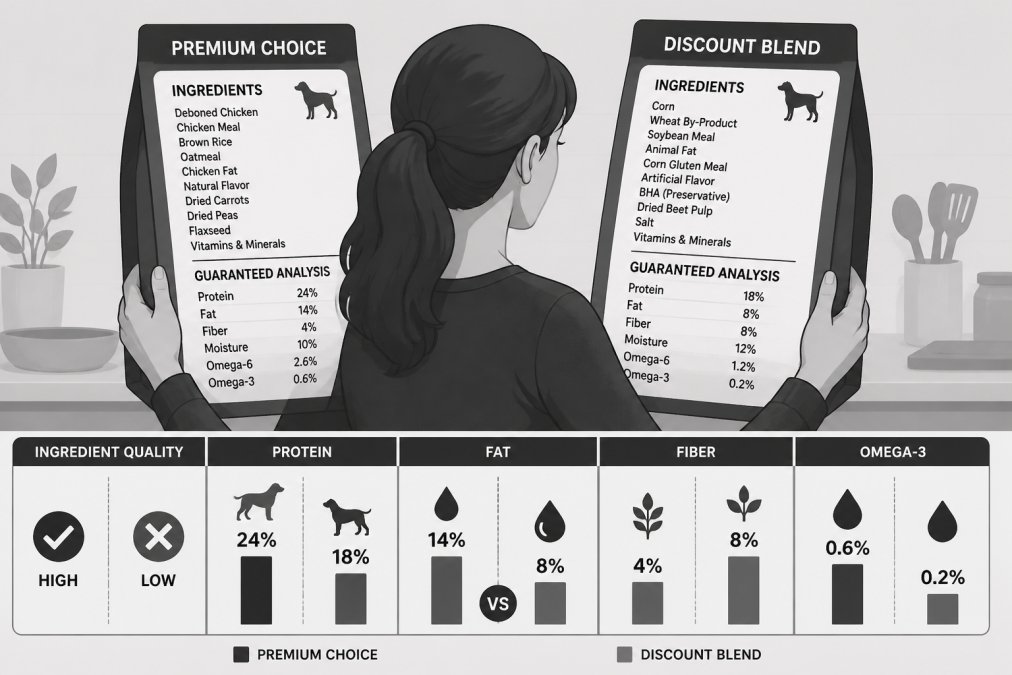
Reading pet food labels reveals whether a discounted product is genuinely lower-cost or lower-quality. Start with the ingredient list. High-quality pet food lists named meat sources (chicken, beef, salmon) as the first ingredient, not "meat meal" or "animal by-products." Discounted options sometimes use less expensive protein sources, which explains the lower price but doesn't automatically mean it's unsafe.
Look for recognizable ingredients throughout the list. Terms like "corn gluten meal" or "soybean meal" indicate filler proteins with lower bioavailability. This is a quality difference, not a safety issue. However, vague terms like "meat by-products" or "poultry meal" without species identification suggest deliberately unclear sourcing.
Check the guaranteed analysis section for crude protein, crude fat, and crude fiber percentages. Discounted foods often have lower protein percentages (18-20% versus 25-30% in premium brands). This affects nutritional value but isn't a safety concern for immediate consumption.
The most important label detail is the manufacturer's name and contact information. Legitimate manufacturers print this clearly. If a label is missing this information or contact details are incomplete, that's a red flag.
Red Flags: Identifying Compromised Packaging and Spoiled Food
Packaging integrity directly affects pet food safety. Before purchasing any discounted pet food, conduct a systematic physical inspection:
Structural Integrity
- Tears, punctures, or pinholes: Any breach allows moisture, oxygen, and potential contaminants to enter. Skip any bag with visible damage.
- Seal quality: Seals should feel tight and uniform. Loose, uneven, or partially separated seals indicate the product may have been opened or improperly resealed. Canned food seals should be smooth and flush.
- Dents and deformation in canned food: Small, shallow dents on flat surfaces are typically cosmetic. However, dents on seams, sharp creases, or deep indentations can compromise the seal. Bulging cans indicate bacterial gas production, never purchase these. Rust spots suggest moisture infiltration.
Content Condition
- Visible mold or discoloration: Any visible mold, discoloration, or clumping in dry food is a deal-breaker. Mold can produce mycotoxins, compounds toxic to pets even in small amounts (the FDA).
- Oil stains or residue on packaging: Exterior oil stains suggest the product has leaked during storage, indicating fat oxidation and rancid compounds that can cause digestive upset.
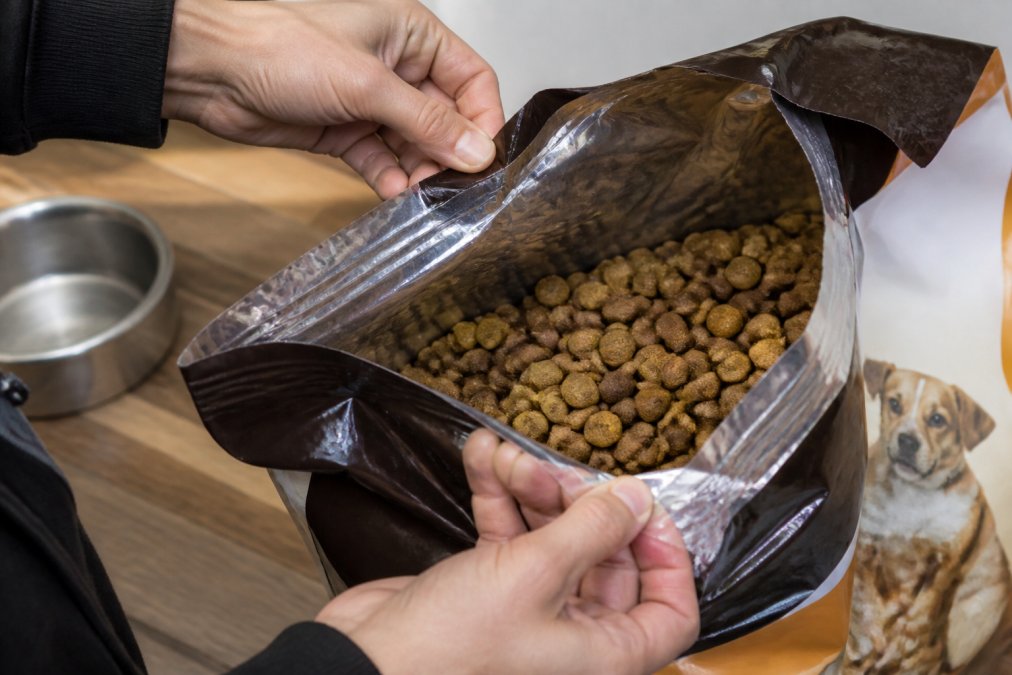
- Moisture or clumping in dry food: Dry kibble should be completely dry with individual pieces moving freely. Clumping or visible moisture indicates improper storage or age-related degradation.
Sensory Assessment
- Unusual odors: Rancid, sour, musty, or chemical smells indicate fat oxidation, bacterial growth, or mold. Trust your nose, if food smells off, don't purchase it.
- Leaking or seeping: Any visible leakage indicates seal failure and potential pathogen contamination.
Storage History Clues Temperature exposure during storage matters significantly. Products from discount bins in uncontrolled environments carry higher risk than those from climate-controlled retail spaces. Ask staff about storage conditions if possible. Professional retailers maintain temperatures between 50-70°F (aafco.org).
Checking the Pet Food Recall Database Before You Buy
Before finalizing any discounted pet food purchase, check the FDA's pet food recall database (the FDA). This free online resource lists all current and historical recalls, including specific product batches, lot numbers, and recall reasons.
Search for your specific product and brand. If the exact product appears on the recall list, do not purchase it. If a product from the same manufacturer appears, check the lot number on your package. Recalls are often limited to specific production batches, not entire product lines. Recalls typically indicate mycotoxin contamination, bacterial contamination, or undisclosed allergens, legitimate safety concerns that warrant avoidance.
Discount Pet Supplies for Dogs Online: Where to Buy Safely
Understanding why pet food is discounted is the first step toward identifying safe deals.
Why Pet Food Gets Discounted: Safe vs. Suspicious Reasons
Safe discount reasons:
- Overstock clearance: Retailers need to clear excess inventory for new shipments. The food is typically fresh and properly stored.
- Best-before date approaching: Products are discounted as best-before dates near, though the food remains safe and nutritious.
- Seasonal shifts: Retailers discount previous seasons' stock to clear shelves.
- Brand repositioning: Older packaging is discounted when manufacturers reformulate or rebrand.
- Direct-to-consumer pricing: Brands selling directly eliminate distributor and retailer markups, often offering fresher products.
Suspicious discount reasons:
- Liquidation sales from unknown sources: Food from liquidated inventory may have unknown storage history.
- Secondary market resellers: Products from wholesale liquidators lack traceability and verified storage conditions.
- Extremely deep discounts (50%+ off retail): Prices this low often indicate limited accountability or legitimate quality concerns.
- Missing or unclear manufacturer information: Questionable sourcing when labels lack clear contact details, batch numbers, or production dates.
Evaluating Online Retailers: Key Questions
- Does the retailer disclose their sourcing? Statements like "direct from manufacturer" or "authorized distributor" are positive signs.
- Is storage and handling information available? Transparency about warehouse conditions and inventory rotation suggests proper handling.
- What is the return policy? Retailers confident in their products accept returns if pets refuse food or show digestive upset.
- Are batch numbers and production dates visible? Reputable retailers display this information.
- Does the retailer have verifiable customer reviews? Prioritize sellers with 500+ sales and ratings above 4.5 stars.
- Is the retailer an authorized distributor? Check the manufacturer's website for authorized retailers.
Retail Channel Comparison
- Established pet supply chains: Typically maintain strict inventory rotation and climate control. Clearance sections represent safe options.
- Direct-to-consumer discount brands: Often offer lower prices through simplified distribution. Verify proper storage and handling protocols.
- Marketplace platforms: Vary widely in seller accountability. Prioritize sellers with high ratings and clear return policies.
- Liquidation and wholesale sites: Higher risk due to unknown storage history. Only purchase with documentation of proper handling.
- Local discount retailers and dollar stores: Often lack climate control. Inspect packaging carefully and verify dates.
Red Flags for Online Retailers
- No return policy or restocking fees for unopened products
- Missing or incomplete manufacturer contact information
- Prices significantly lower than other authorized retailers (40%+ below typical pricing)
- No seller reviews or ratings below 4 stars
- Vague sourcing language
- No response to customer service inquiries
- Inability to provide batch numbers or production dates
Storage and Shelf-Life Extension for Discounted Pet Food
Proper storage extends the shelf life of discounted pet food significantly. Transfer opened bags to airtight containers immediately. Label containers with the original best-before date.
Store pet food in cool, dry locations away from direct sunlight. Avoid garages, attics, or areas subject to temperature fluctuations. Heat accelerates nutrient degradation and fat oxidation, reducing shelf life dramatically.
Canned pet food requires less careful storage but benefits from cool conditions. Once opened, transfer unused portions to airtight containers and refrigerate for no more than three days.
Some pet owners freeze portions of discounted food to extend shelf life. Freezing halts oxidation and nutrient degradation effectively. Thaw frozen portions in the refrigerator before serving.
The Bottom Line: Safe Savings on Pet Nutrition
Buying discounted pet food can be safe when you evaluate products systematically. Check dates, inspect packaging, read labels carefully, verify the recall database, and source from reputable retailers. The price difference between premium and discounted pet food often reflects ingredient sourcing and marketing spend, not safety.
The real risk emerges from compromised packaging, unclear sourcing, or purchasing from retailers with no accountability. By applying the inspection steps outlined here, you significantly reduce risk while accessing genuine savings. Bargain Warriors LLC helps budget-conscious pet owners find affordable supplies without guessing. When you shop through established discount retailers with transparent sourcing, you gain access to the same safety standards as premium retailers while paying substantially less.
Frequently Asked Questions
What are the signs of spoiled or unsafe pet food?
Spoiled pet food shows visible mold, an off or rancid smell, clumping in dry kibble, or discoloration. Wet food with bulging cans, leaks, or rust indicates pathogen contamination. Check the best-before date first. If packaging is compromised or the food has been stored in high heat or humidity, discard it. When in doubt, don't feed it to your pet, the risk isn't worth the savings.
How do I check if a pet food brand has been recalled using the pet food recall database?
Visit the FDA's pet food recall database at fda.gov and search by brand name or product. You can also sign up for recall alerts. Check this database before buying discounted pet food, especially from secondary markets or clearance sections. Many recalls involve nutrient degradation, mycotoxins, or bacterial contamination that aren't visible. Retailers sometimes discount recalled stock unknowingly, so verify the product isn't on the list.
Is it safer to buy discounted pet food online from authorized retailers?
Yes, authorized online retailers follow regulatory compliance standards and maintain proper storage conditions. They track inventory more carefully and honor labeling requirements. Secondary market sellers or unauthorized retailers may store food in poor temperature control, risking oxidation and nutrient loss. Buy from retailers you recognize or check their supply chain transparency practices. Authorized retailers are less likely to sell compromised stock.
What is the difference between best-before dates and expiration dates on pet food?
Best-before dates indicate when nutrient degradation may begin, the food is still safe but may lose potency. Expiration dates mean the food should not be fed after that date due to safety or regulatory concerns. Pet food labels must show one or the other under FDA standards. Always check the date on discounted pet food, as clearance items are often near their best-before date. Proper storage can extend shelf stability slightly, but never feed past the expiration date.
Safe discounted pet food shopping starts with informed inspection. Apply the labeling checks, packaging assessments, and recall database verification outlined above before every purchase. This approach takes minimal time and eliminates most risk. At Bargain Warriors LLC, we believe you shouldn't choose between your pet's health and your budget. Shop now and discover how to save on pet nutrition without compromise.
This article was written using GrandRanker