

Table of Contents
- Why Buying Discount Home Essentials Online Beats In-Store Shopping
- How to Find Home Clearance Sales That Actually Save You Money
- Affordable Home Decor Online: Styling Your Space Without Overspending
- Everyday Living Essentials: Kitchenware, Laundry, and Paper Products
- Top Discount Home Essentials to Grab Right Now
- Subscription vs. One-Time Purchase: Which Saves More?
- Eco-Friendly and Sustainable Household Essentials on a Budget
- Bulk Buying for Small Spaces: A Practical Guide
- Frequently Asked Questions
Last Updated: September 14, 2026
Why Buying Discount Home Essentials Online Beats In-Store Shopping
Learning how to buy discount home essentials online is the single fastest way to cut your household spending without cutting quality. At Bargain Warriors LLC, we've watched shoppers save real money by skipping the drive, the impulse aisle, and the "sale" tags that aren't actually sales.
The math is simple. Online retailers carry less overhead, and that savings shows up at checkout. According to the U.S. Bureau of Labor Statistics Consumer Expenditure Survey, housing and household expenses eat up the largest share of the average family budget. Every dollar you trim from cleaning supplies, paper products, and kitchenware is a dollar that stays in your pocket.
Here's what most shoppers get wrong: they treat in-store browsing as free. It isn't. Gas, time, and the temptation to grab one more thing add up fast. Online shopping removes all three.
- No fuel costs or parking fees
- Price comparison in seconds, not hours
- Access to clearance sections from multiple sellers at once
- Free shipping thresholds that beat impulse buys
The one drawback? You can't touch the product first. That's why return policies matter more online than in a store, and it's the first thing to check before you click buy.
How to Find Home Clearance Sales That Actually Save You Money
Finding genuine home clearance sales comes down to understanding how retail pricing actually works, not luck. Most "clearance" tags are just marketing. Real price reductions follow predictable patterns tied to inventory accounting, seasonal resets, and how sellers manage cash flow.
Here's the mechanism behind the markdown. Retailers buy inventory on terms, and unsold stock ties up cash and warehouse space. When a SKU sits too long, the carrying cost starts eating into margin. That's when a real clearance happens, not when a holiday banner goes up. Knowing this changes how you shop.
Watch for these windows:
- End of season: Seasonal decor and outdoor items drop hardest right after the season ends. The deepest cuts hit patio furniture and holiday lighting in the two to four weeks after the peak date passes.
- Inventory turnover: Retailers clear stock before restocking, usually at quarter-end. Look for price drops in the final two weeks of March, June, September, and December.
- Overstock surges: When a seller orders too much, prices fall fast. These are unpredictable but show up as sudden 40-60% cuts on items that were never seasonal to begin with.
- Open-box and return pallets: Many large sellers liquidate customer returns at steep discounts. The item is functional but the packaging is damaged. If you don't care about the box, this is often the single deepest discount channel.
A common mistake is buying the moment you see a discount. Wait for the second markdown on slower-moving items. The first reduction is often 15-25% off; the second is where value for money gets real, often 50% or more (the FTC). The trade-off is selection, by the second markdown, popular sizes and colors are gone.
Set a price alert or check back weekly. Restocks happen, and a sold-out item often returns at the same discounted price. A few practical habits separate people who actually save from people who just feel like they did:
- Screenshot the price when you first see an item. If it "drops" two weeks later but is still above your screenshot, it was never a real discount.
- Check the unit price, not the sticker. A $12 pack of 6 costs more per unit than a $20 pack of 12 (The FTC Funeral Rule).
- Buy off-season for the biggest spread. Patio furniture in September and space heaters in March routinely sell for a fraction of peak pricing.
- Stack discounts where allowed. Clearance items sometimes still qualify for sitewide promo codes or loyalty rewards, read the fine print before assuming they don't.
The one rule that matters: a discount is only real if you would have bought the item at full price anyway. Otherwise it's spending, not saving.
Affordable Home Decor Online: Styling Your Space Without Overspending
Affordable home decor online works best when you pick a few statement pieces instead of filling every corner. One well-chosen item does more for a room than ten cheap ones.
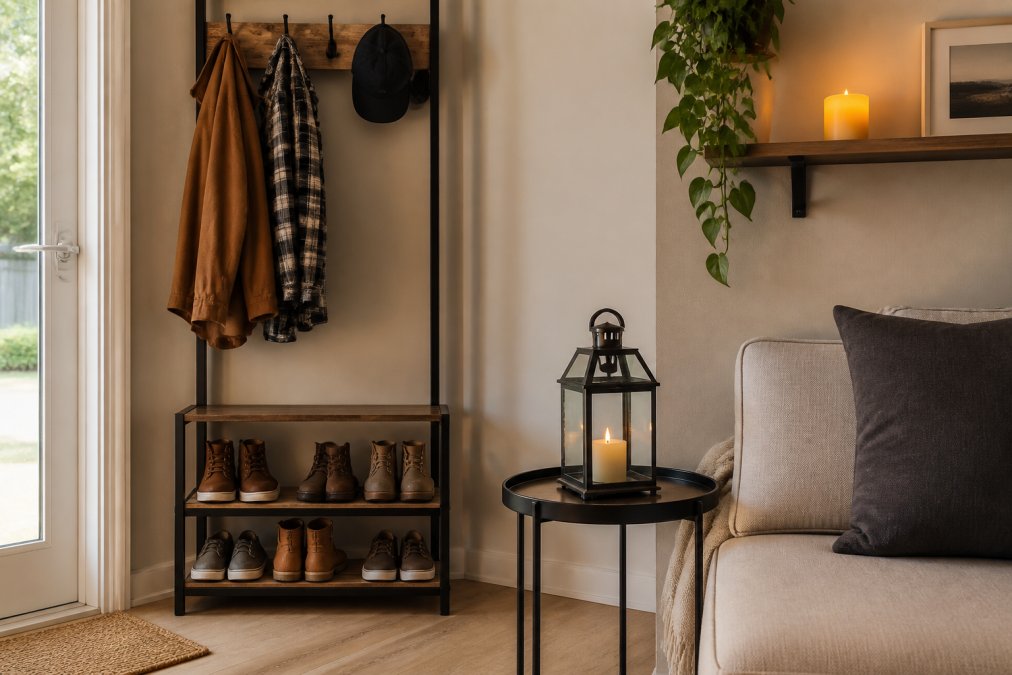
Start with pieces that pull double duty. The Stylish Entrance Shoe and Clothes Hanger Rack at $14.99 organizes your entryway and looks intentional while doing it. That's the principle: function first, style follows.

For warmth, the Elegant Black Iron Nordic Lantern Candle Holders at $52.99 anchor a dining table or shelf with a classic silhouette. If you want cozier light without an open flame, the USB Flickering Flame LED Night Light at $8.99 delivers the same ambiance for less than a takeout lunch.

The trick is restraint. Buy two or three pieces that match your existing palette, then stop.
Everyday Living Essentials: Kitchenware, Laundry, and Paper Products
Restocking everyday living essentials is where budgets quietly leak. These aren't exciting purchases, so people overpay without noticing.
Three categories deserve your attention:
- Kitchenware: Buy once, buy sturdy. Cheap pans that warp cost more over a year than one solid set.
- Laundry care: Concentrated formulas and refill pouches cut cost per load.
- Paper products: Bulk packs lower unit price, but only if you have storage.
Home organization and floor care supplies follow the same rule. Track what you actually use each month, then buy in the quantity that matches that pace. Buying 48 rolls of paper towels when you use four a month just ties up cash and closet space.
Top Discount Home Essentials to Grab Right Now
The best deals right now combine seasonal demand with low prices. Here's what's worth grabbing.
Seasonal lighting is the standout category. The Halloween Ghost Pendant Lights at $9.99 and the Halloween 3D Bat Night Lights at $17.99 add instant character for the price of a coffee run. The Handcrafted Resin Witch Hat Lamp at $11.99 works year-round as a quirky accent, not just in October.

For kids' rooms, the Rechargeable Pumpkin-Shaped Night Light at $14.99 is soft, rechargeable, and safe for little hands.
| Item | Price | Best For |
|---|---|---|
| Entrance Shoe and Clothes Hanger Rack | $14.99 | Entryway organization |
| Halloween Ghost Pendant Lights | $9.99 | Party and porch decor |
| USB Flickering Flame LED Night Light | $8.99 | Ambient, flame-free lighting |
| 3D Bat Night Lights | $17.99 | Kids' rooms and walls |
| Nordic Lantern Candle Holders | $52.99 | Statement table decor |
Prices like these don't last. Retail inventory on seasonal goods clears fast.
Subscription vs. One-Time Purchase: Which Saves More?
One-time purchases usually win for home essentials, while subscriptions make sense only for items you replace on a fixed schedule. That's the honest answer most guides skip.
Subscriptions offer convenience and predictable delivery. They also lock you into a price and a cadence. If your usage drops, you're paying for product you don't need.
Use this rule:
- Subscribe for consumables you burn through at a steady rate, like laundry detergent.
- Buy once for anything durable, seasonal, or used irregularly.
Consumables you replace monthly tend to favor subscriptions. Decor, storage, and kitchenware almost never do. When in doubt, buy one cycle at full price, measure how long it lasts, then decide.
Eco-Friendly and Sustainable Household Essentials on a Budget
Sustainable household essentials don't have to cost more. The greenest option is often the cheapest one over time.
Focus on reusables that replace disposables:
- Microfiber cloths instead of paper towels
- Refillable cleaning concentrate instead of new spray bottles
- Rechargeable lighting instead of battery-powered
That last point matters. The Rechargeable Halloween Night Light and the 360° Rotatable Skull LED Night Light at $11.99 both skip disposable batteries entirely. Fewer batteries means less waste and lower long-term cost.
Durability is the other lever. A metal lantern that lasts years beats a plastic one you replace every season.
Bulk Buying for Small Spaces: A Practical Guide
Most bulk-buying advice assumes you have a garage, a basement, or a pantry the size of a closet. If you live in an apartment or a small home, that advice doesn't just fail, it costs you money in wasted product and lost square footage. This section is for the space-constrained shopper, a gap most buying guides skip entirely.
Bulk buying and small spaces can coexist if you follow one rule: buy in the format, not the quantity. You want the lowest unit price without drowning in storage. That means the decision isn't "how much can I buy" but "what shape does it come in and where will it live."
Start by measuring your real usage. Pick three staples, say paper towels, laundry detergent, and dish soap, and track how long one normal-sized unit lasts. Write it down. Most people overestimate how fast they burn through supplies, which is why bulk packs expire in the closet instead of getting used.
Once you have your burn rate, apply these tactics:
- Choose flat or stackable packaging. A 12-pack of flattened refill pouches takes a fraction of the shelf space of 12 rigid bottles holding the same amount of product. Concentrated formulas and refill cartridges are the single biggest space win in bulk buying.
- Split bulk orders with a neighbor or family member. Warehouse-club quantities are priced for households of four or more. Two households splitting one pack get the unit price without the storage burden.
- Cap your stock at a two-month supply for anything you use weekly. This keeps cash free and prevents the classic small-apartment problem of a closet that's 80% paper goods.
- Use vertical and hidden space. Under-bed bins, over-door racks, and the top shelf of a closet are where bulk stock belongs. If it doesn't fit in a designated zone, you bought too much.
- Prioritize non-perishables for bulk. Detergent, paper products, trash bags, and cleaning concentrates hold up for years. Anything with a shelf life under 12 months should be bought in smaller quantities even if the unit price is higher.
A common mistake is chasing the biggest pack. The unit price drops, but if it takes up your closet and expires, you've lost. Match bulk size to real usage and available space.
The honest trade-off: bulk buying in a small space requires more planning than bulk buying in a house. You're trading convenience for unit price. If the planning overhead outweighs the savings for a given item, buy the smaller size and move on. The goal isn't to buy everything in bulk, it's to buy the right things in bulk.
Frequently Asked Questions
Where is the cheapest place to get household essentials?
Online discount retailers often beat big-box stores on everyday essentials because they carry less overhead and pass the savings on. Bargain Warriors LLC, for example, sells home items like an entrance shoe and clothes hanger rack for $14.99 and a USB flickering flame LED night light for $8.99. Compare unit prices, watch for free shipping thresholds, and check the clearance section regularly to stretch your budget further.
How do I know discounted items are authentic and not rejected returns?
Reputable discount retailers buy overstock and closeout inventory directly from manufacturers, not from customer returns. Check the product description for material details and warranty information before buying. A store that lists exact dimensions, materials, and power specs, like the 0.5W USB flickering flame LED night light, is giving you enough detail to judge quality before checkout.
What are the best websites for discounted home decor and supplies?
Look for sites that specialize in closeout and overstock home goods rather than general marketplaces. Bargain Warriors LLC stocks affordable home decor online, including Nordic lantern candle holders at $52.99 and Halloween-themed LED lights starting at $8.99. Read return policies before ordering, and sign up for email alerts so you catch restocks and new markdowns as soon as they drop.
How often do discount home essentials get restocked?
Restock schedules vary by product and season. Seasonal items like Halloween decor tend to sell through quickly, while core home organization pieces stay in stock longer. If something sells out, check back weekly and sign up for notifications. Buying popular items early in the season gives you the best selection and the lowest prices before demand pushes inventory down.