

Table of Contents
- Understanding Common Hidden Fees in Online Checkout
- How to Spot Pre-Selected Add-Ons Before You Buy
- How to Avoid Shipping Costs Online
- Avoiding Restocking Fees for Online Returns
- Using Online Shopping Price Comparison Tools
- Detecting Dark Patterns and Subscription Traps
- Your Rights Under Consumer Protection Laws
- Frequently Asked Questions
Last Updated: August 31, 2026
Understanding Common Hidden Fees in Online Checkout
Most retailers embed additional charges after you've committed to a purchase, when you're least likely to abandon your cart. The advertised price rarely matches your final transaction amount. Retailers justify these charges as service fees, convenience fees, or processing costs, but the effect is the same: your total bill climbs higher than expected.
Service Charges and Convenience Fees
Service charges and convenience fees represent the most common hidden cost in online shopping. These charges appear under different names, processing fees, handling charges, order processing fees, or service surcharges, and typically range from a flat amount to a percentage of your order, applied at the final checkout step when you're psychologically committed to completing the purchase.
Convenience fees specifically target payment method choices. If you pay by credit card instead of bank transfer, or if you select express checkout, you'll see an additional charge. Some retailers charge different fees for different credit card types; using an American Express card might cost more than using Visa. By the time you see the fee, you've already filled out your shipping address and mentally completed the transaction, making abandonment feel like wasted effort.
Dynamic Pricing and Inflationary Adjustments
Dynamic pricing adjusts your price based on demand, inventory levels, your browsing history, and even the device you're using. A pair of shoes might cost one price on desktop and a different price on mobile. Inflationary adjustments represent a newer tactic where retailers add fees to offset rising costs as separate line items labeled "inflation adjustment," "supply chain surcharge," or "sustainability fee", additional profit margins disguised as necessary costs, typically 3-5% of your order total (the FTC).

How to Spot Pre-Selected Add-Ons Before You Buy
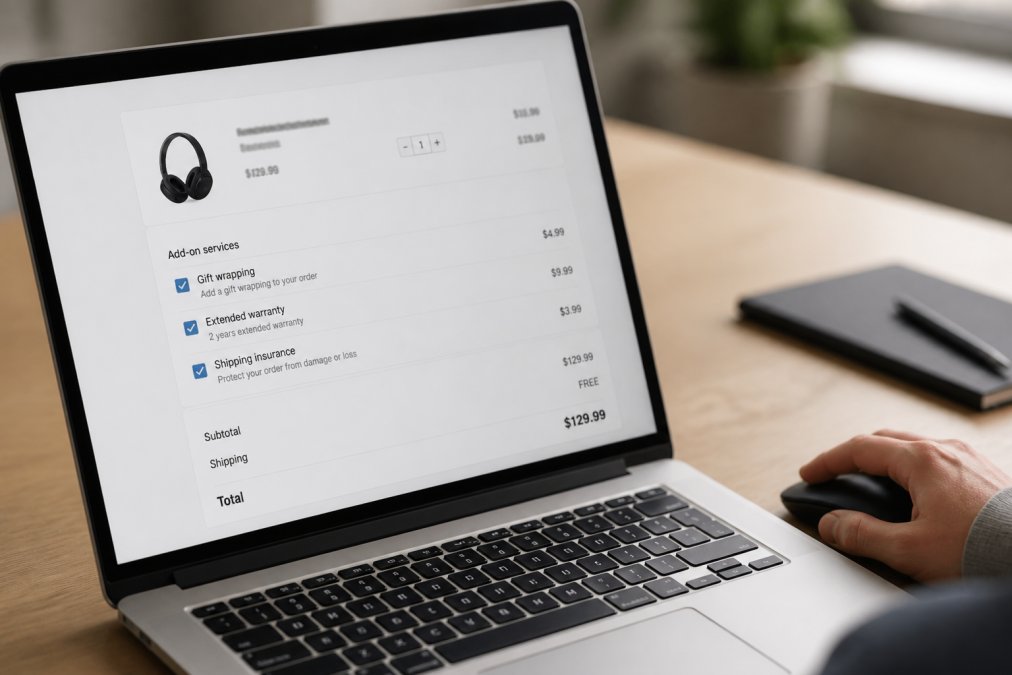
Pre-selected add-ons are services or products automatically checked in your cart that you never explicitly chose. Gift wrapping, expedited shipping, protection plans, and extended warranties arrive pre-selected, forcing you to actively uncheck them to avoid the charge. Most retailers place these checkboxes in low-contrast gray text or bury them in a cluttered checkout interface, with the default state set to "checked."
Scanning your cart summary before confirming your order is essential. Look for any items you didn't explicitly add yourself, especially those appearing near the bottom or in a section labeled "recommended add-ons" or "complete your order." Gift wrapping fees typically charge $5-15 for wrapping that costs retailers under $1 to apply. Protection plans and warranty extensions are even more profitable, with retailers making 60-80% margins on these add-ons.
How to Avoid Shipping Costs Online
Shipping surcharges represent one of the largest hidden fees in online retail. A $30 item can become $45 after shipping costs are revealed at checkout. Understanding your shipping options before reaching the payment stage gives you time to make strategic decisions.
Using In-Store Pickup to Bypass Shipping Surcharges
In-store pickup eliminates shipping charges entirely while removing return shipping hassles. Many retailers offer this service free or at a minimal fee, making it the most cost-effective option for budget-conscious shoppers. The catch is availability, not all items ship to in-store pickup locations, and some retailers limit this service to certain store locations. When available, in-store pickup also reduces delivery time from 5-7 business days to same-day or next-day availability.
Qualifying for Free Shipping Thresholds
Free shipping thresholds encourage larger purchases. Most retailers offer free shipping on orders above $35-75. Understanding this threshold before shopping lets you strategically add items to reach it rather than paying shipping on a smaller order. Check the retailer's shipping policy before you start shopping. If you're $10 short of free shipping, adding one more item might be more economical than paying the shipping fee.
Free shipping promotions are seasonal, offered during peak shopping periods (holidays, back-to-school, seasonal sales) to drive volume. Sign up for retailer email lists to catch these promotions before they expire.
Avoiding Restocking Fees for Online Returns
Restocking fees penalize you for returning items, sometimes charging 15-30% of the purchase price just to process your return. These fees are most common in electronics, furniture, and specialized items. Understanding a retailer's return policy before you purchase prevents expensive surprises.
Restocking fees are disclosed in the return policy, but most customers don't read policies before purchasing. The fee appears only when you initiate a return. Some retailers waive restocking fees for defective items but charge them for returns of items in perfect condition. The legality of restocking fees varies by jurisdiction and product category, clothing and fashion accessories typically don't carry restocking fees, while electronics and furniture frequently do.
Read the return policy section of any product page before adding items to your cart. Look for language about restocking fees, return shipping costs, and time limits for returns. Bargain Warriors LLC maintains transparent return policies on all categories, with restocking fees clearly disclosed before purchase.
Using Online Shopping Price Comparison Tools
Price comparison tools aggregate prices across multiple retailers, showing you the lowest available cost for specific items. Browser extensions that automatically apply coupon codes and alert you to price drops add another layer of savings. These tools scan the retailer's website for available coupons and apply the best one at checkout without requiring manual searching.
Comparison shopping takes an extra 5-10 minutes but often saves $5-20 per purchase. For larger purchases like furniture or electronics, the time investment pays for itself immediately. Bargain Warriors LLC prices competitively on all categories, but comparing prices ensures you're making informed purchasing decisions.
Detecting Dark Patterns and Subscription Traps
Dark patterns are deliberately deceptive design choices that manipulate users into making unintended purchases or sharing data. Subscription traps automatically enroll you in recurring charges after your initial purchase. A "free trial" becomes a paid subscription unless you cancel within a specific window, often just 7-14 days. The cancellation process is intentionally difficult, requiring multiple pages or customer service contact.
Browser Extensions for Fee Detection
Browser extensions that detect dark patterns and subscription traps provide real-time alerts while you shop. These tools scan checkout pages for common deceptive patterns and highlight pre-selected options, confusing button layouts, and hidden subscription terms. Extensions that track pricing across your browsing session alert you if prices change between when you first viewed an item and checkout.
Mobile App vs. Desktop Pricing Discrepancies
Mobile apps frequently show different prices than the retailer's website for identical items. Some apps offer exclusive discounts to encourage downloads, while others show higher prices than the website. Checking prices on both the app and website before purchasing ensures you're getting the best available price.
Incognito mode browsing prevents price personalization based on your browsing history. When you shop in incognito mode, the retailer can't access cookies that track your previous visits and shopping behavior, preventing dynamic pricing that increases prices for repeat visitors.
Your Rights Under Consumer Protection Laws
Consumer protection laws in the United States require retailers to disclose all mandatory fees before you complete your purchase. The Federal Trade Commission enforces regulations requiring clear, conspicuous disclosure of final prices. If a retailer adds unexpected fees at checkout that weren't disclosed earlier, you have legal recourse.
The Restore Online Shoppers Confidence Act prohibits negative option billing (automatic recurring charges) without clear, affirmative consent. If you're enrolled in a subscription without explicit agreement, or if cancellation is unreasonably difficult, the retailer is violating federal law. You can file complaints with the FTC and request refunds for unauthorized charges.
State laws provide additional protections. Some states require retailers to clearly disclose all fees in a format that's easily visible before checkout. California's consumer protection laws are particularly strict about dark patterns and deceptive practices. Documentation is essential if you need to dispute charges, save screenshots of your checkout process, including all fees that appeared, and your order confirmation email.
Federal Trade Commission guidance on online shopping disclosures
Consumer Financial Protection Bureau resources on unauthorized charges
Avoiding hidden fees requires vigilance at every stage of the online shopping process. Start by comparing prices across devices and retailers before you commit to a purchase. Review your cart carefully before checkout, unchecking any pre-selected add-ons. Understand the retailer's shipping and return policies before purchasing. At Bargain Warriors LLC, we believe transparent pricing builds trust with our customers. Our commitment to clear, upfront pricing means no surprise fees at checkout, what you see is what you pay. Shop with confidence knowing that your final price matches the advertised price, with no hidden surcharges or pre-selected add-ons waiting at checkout.
| Fee Type | Detection Method | Prevention Strategy |
|---|---|---|
| Service charges | Review final checkout screen | Compare payment methods before confirming |
| Pre-selected add-ons | Scan cart summary | Uncheck unwanted items before purchase |
| Shipping surcharges | Check shipping policy | Use in-store pickup or reach free shipping threshold |
| Restocking fees | Read return policy | Review before purchasing high-ticket items |
| Dynamic pricing | Check price in incognito mode | Compare across devices and retailers |
| Subscription traps | Review terms carefully | Set calendar reminder for cancellation deadline |
Frequently Asked Questions
What are the most common types of hidden fees in online retail?
The most common hidden fees include shipping surcharges, service charges, convenience fees, restocking fees on returns, rush processing charges, gift wrapping fees, and pre-selected add-ons like gift messaging or extended warranties. Many retailers also use drip pricing, where fees appear only at the final checkout stage. Some sites apply dynamic pricing that changes based on browser cookies or device type. Subscription traps, where a free trial converts to a paid membership without clear notice, are another frequent culprit. Always review the final transaction amount before confirming your order.
How can I tell if a shipping fee is inflated or legitimate?
Compare shipping costs across multiple retailers for the same item. Check whether in-store pickup is available as a free alternative. Review the retailer's shipping policy to see if fees vary by weight, distance, or delivery speed. Use price comparison tools to see what other sites charge for identical products and delivery timeframes. Be wary of shipping fees that seem disproportionate to the item's weight or price. Loyalty programs and membership benefits often waive or reduce shipping costs, so check if you qualify. If a fee seems unreasonable, contact customer service to ask if discounts apply.
Are there federal regulations protecting consumers from hidden online fees?
Yes. The Federal Trade Commission (FTC) enforces the Restore Online Shoppers Confidence Act (ROSCA), which requires clear and conspicuous disclosure of all material terms, including fees, before charging a consumer. The FTC also prohibits negative option billing (subscription traps) without explicit informed consent. Additionally, the Truth in Lending Act (TILA) and state consumer protection laws require transparent pricing. If a retailer fails to disclose fees clearly before checkout or charges you without authorization, you have grounds to dispute the charge with your credit card issuer and file a complaint with the FTC.
What should I look for in a return policy to avoid restocking fees?
Look for policies that offer free returns within 30 days or longer, with no restocking fees. Check whether the retailer covers return shipping or requires you to pay. Some retailers waive restocking fees if you return items in original condition with tags attached. Review whether refunds are issued to your original payment method or as store credit. Avoid retailers that charge restocking fees for final sale or clearance items. Read the fine print on condition requirements, some sites charge fees if items show signs of wear. Always photograph items before returning them, and use tracked shipping so you have proof of delivery.
This article was written using GrandRanker